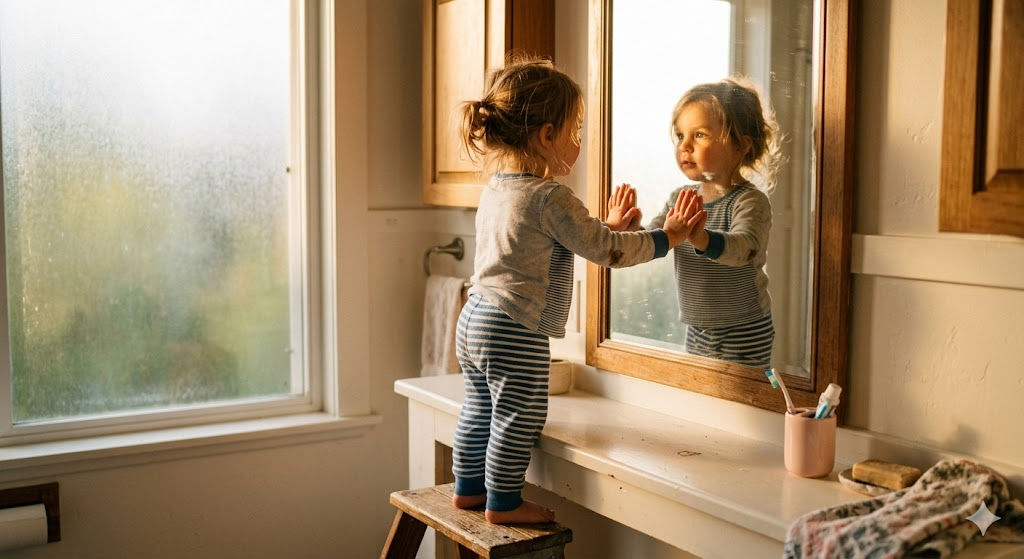
Children absorb everything. The words spoken to them, the patterns they observe, the messages they receive about who they are and what they're capable of — these land in the developing brain with enormous force. Affirmations for kids aren't just feel-good phrases. They're deposits into a child's internal belief system that compound over a lifetime.
The goal isn't to raise children who think they're perfect. It's to raise children who know they are loved, capable, and resilient — who have a stable inner voice to return to when the world gets loud or hard.
Why Affirmations Work So Well for Children
Children's brains are naturally more plastic and receptive than adult brains. The prefrontal cortex — responsible for critical self-evaluation — is still developing, which means positive messages are absorbed more deeply and less filtered by skepticism.
Repeated positive affirmations in early childhood help wire the default narrative children carry into adulthood. They don't just hear “I am brave” — over time, they become the child who acts bravely, who identifies as brave, whose first response to fear is “I can do this anyway.”
10 Affirmations for Self-Confidence and Self-Worth
- I am brave, strong, and capable.
- I am loved exactly as I am — nothing I do changes that.
- I believe in myself and my abilities.
- I am enough, and I always have been.
- My voice matters and people are glad to hear it.
- I am proud of who I am.
- I can do hard things — I've done them before.
- I am unique, and my uniqueness is a superpower.
- I deserve kindness and I give kindness in return.
- I am growing better and stronger every single day.
10 Affirmations for Resilience and Handling Mistakes
- Mistakes help me learn — they don't mean I'm not smart.
- It's okay to try again. The trying is what matters.
- I don't give up when things get hard — I ask for help and keep going.
- Failing at something doesn't make me a failure.
- Every time I keep trying, I get stronger.
- I am allowed to feel frustrated and still choose to try again.
- Hard things become easier with practice.
- I learn something new every day, even from my mistakes.
- My best is always good enough.
- I grow a little every time I face something difficult.
10 Affirmations for Kindness and Connection
- I am a good friend who listens and cares.
- My kindness makes the world better.
- I treat others the way I want to be treated.
- I stand up for what's right and I am brave enough to be kind.
- I make people feel welcome and included.
- I share, I listen, and I care — and that makes me a great person to be around.
- I choose kindness even when it's hard.
- Everyone has feelings, and I treat them with respect.
- I am someone others can count on.
- The kindness I give always comes back to me.
10 Affirmations for School and Learning
- I love learning new things every day.
- My brain is always growing — the more I learn, the smarter I get.
- I focus well and do my best work.
- Asking questions is smart, and I ask them freely.
- I am creative, curious, and full of great ideas.
- Challenges make me think harder and grow more.
- I am proud of my work, even when it's not perfect.
- I can learn anything — I just need time and practice.
- School is a place where I grow, and I embrace that.
- I am exactly where I need to be in my learning.
How to Introduce Affirmations to Children by Age
Ages 3–6: Keep it simple and physical. Say them together while looking in a mirror. Use lots of repetition and enthusiasm. “I am brave! I am kind! I am loved!”
Ages 7–10: Introduce the idea that what we say to ourselves matters. Let children choose their favorites. Post them on the bathroom mirror or inside their backpack.
Ages 11–14: Teenagers respond better to discussion than recitation. Talk about why affirmations work. Let them write their own. Make it their practice, not a parent-imposed one.
FAQ: Affirmations for Kids
- At what age can kids start using affirmations?
- Children as young as 3–4 can benefit from simple, repeated positive statements. The key is keeping language age-appropriate and making it feel like a fun, loving ritual rather than a task.
- Should I say affirmations with my child or have them say it alone?
- For young children, doing it together is more powerful. You model the practice and create a shared bonding ritual. Older children can develop their own independent practice.
- What if my child resists or thinks it's silly?
- Don't force it. Make it casual — “I believe in you” said at drop-off, notes in a lunchbox, a bedtime ritual rather than a formal recitation. Plant seeds without pressure.
- Are affirmations better than praise?
- Affirmations and praise serve different purposes. Affirmations build identity and self-concept. Praise acknowledges specific actions. Research (Carol Dweck) suggests praising effort over traits — “You worked so hard on that” builds resilience better than “You're so smart.”
- Can affirmations help with childhood anxiety?
- Yes, with support. Grounding affirmations (“I am safe,” “I am loved,” “I can do this”) can be especially helpful for anxious children when paired with slow breathing. For significant anxiety, professional support is recommended.
The words you plant in a child's heart today become the voice they carry forever. Make that voice one of courage, kindness, and unshakeable self-worth.